

Modern construction projects require more than attractive architectural concepts. Large commercial buildings, mixed-use developments, industrial facilities, and urban infrastructure projects involve complex technical requirements, regulatory considerations, and coordination between multiple engineering disciplines.
As development projects become increasingly sophisticated, property owners and investors must decide whether their projects require specialized architectural and engineering expertise.
This is where an international architectural engineering consultant firm can provide valuable support.
Such firms combine architectural planning, structural engineering, civil engineering, and multidisciplinary technical knowledge to address challenging development requirements. Depending on their experience and capabilities, they may also contribute international design perspectives, advanced planning methodologies, and specialized engineering solutions.
However, international consultancy is not necessary for every construction project. Understanding when to engage these professionals helps developers make informed decisions regarding project scope, design quality, technical complexity, and long-term investment value.
For developers in Bangladesh, choosing the right architectural and engineering consultants can be especially important for large-scale commercial, institutional, and mixed-use developments.
What Is an International Architectural Engineering Consultant Firm?
An international architectural engineering consultant firm provides professional design, planning, and engineering consultancy services for construction and development projects across multiple countries or markets.
These firms may employ multidisciplinary teams or collaborate with specialist consultants to deliver comprehensive project solutions.
Their services commonly include:
- Architectural design and development
- Structural engineering and technical assessment
- Civil engineering and infrastructure planning
- Urban master planning
- Mixed-use development planning
- Building systems coordination
- Construction documentation
- Sustainability and environmental design
- Technical feasibility studies
The primary objective is to integrate architectural creativity with engineering feasibility.
Unlike design services focused mainly on visual appearance, multidisciplinary consultancy considers how buildings perform structurally, function operationally, and interact with surrounding infrastructure.
1. When Planning Large-Scale Mixed-Use Developments
One of the most important situations for engaging an international architectural engineering consultant firm is the development of a large mixed-use property.
Mixed-use developments combine different functions, such as residential apartments, offices, retail spaces, hotels, entertainment facilities, and parking infrastructure, within a coordinated development.
These projects require careful planning because each function has different operational and technical requirements.
Managing Multiple Building Functions
For example, a mixed-use complex may accommodate residential occupants, commercial tenants, shoppers, employees, and service personnel.
Architects must organize entrances, elevators, circulation routes, parking facilities, and service areas to minimize conflicts between these user groups.
Engineering consultants must simultaneously consider structural systems, fire safety, drainage, utilities, and mechanical services.
Experienced multidisciplinary teams can coordinate these requirements during early planning.
This integrated approach helps developers establish functional relationships between different building components while maintaining the overall project's architectural identity.
2. When a Project Requires Urban Master Planning
Large developments frequently extend beyond individual buildings.
Township projects, institutional campuses, industrial estates, and integrated residential communities require careful coordination of land use, infrastructure, circulation, and public spaces.
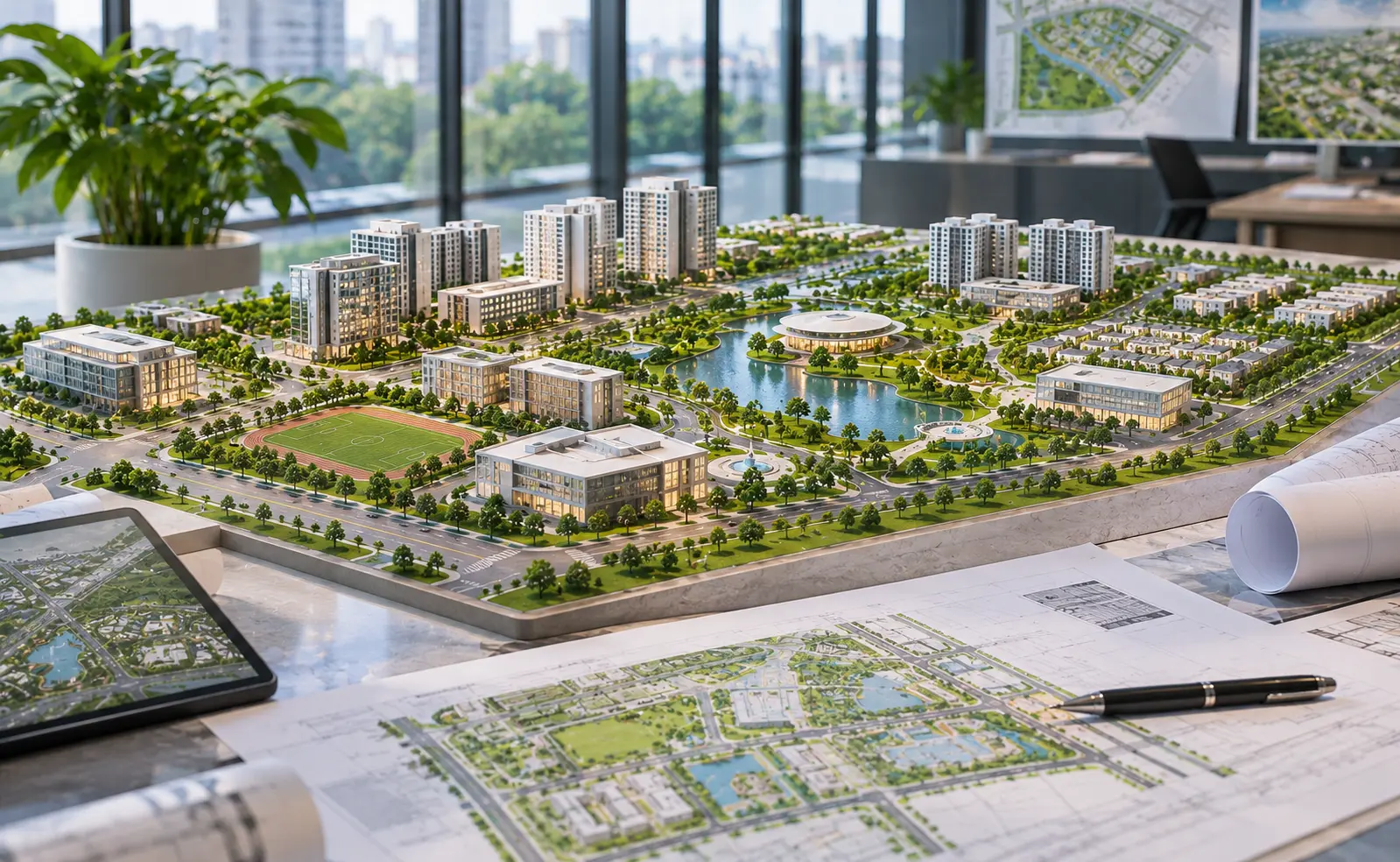
Professional master planning consultants help developers establish a comprehensive development framework before individual structures are designed.
Understanding Urban Master Planning
Urban master planning considers how buildings, roads, open spaces, utilities, and community facilities function together.
Important planning elements include:
- Land-use allocation
- Road networks and accessibility
- Pedestrian circulation
- Infrastructure and utility distribution
- Green spaces and landscape planning
- Drainage and environmental considerations
- Future development opportunities
For example, a township project may require phased development over several years.
Without a coordinated master plan, future construction phases may create infrastructure conflicts or inefficient land utilization.
An experienced consulting team can develop a planning framework that supports present requirements while considering future expansion.
3. When Structural Integrity Becomes a Major Concern
Structural safety is a fundamental requirement for any construction project.
However, certain developments present additional engineering challenges because of their height, complexity, loading conditions, or surrounding environment.
High-rise buildings, large commercial structures, and facilities with unusual architectural forms may require specialized structural analysis.
An international architectural engineering consultant firm may provide access to engineers experienced in complex structural systems.
Evaluating Structural Integrity
Structural integrity refers to a structure's ability to safely resist anticipated loads and environmental forces throughout its intended service life.
Structural engineers evaluate factors such as:
- Foundation requirements
- Building loads and structural stability
- Wind and seismic effects
- Soil and ground conditions
- Material performance
- Structural connections
- Applicable safety standards
In Bangladesh, structural design must account for relevant building regulations, site-specific ground conditions, and applicable engineering requirements.
International engineering expertise can be valuable for technically demanding projects, but it must be coordinated with qualified local professionals who understand national regulations and site conditions.
4. When Civil Engineering and Infrastructure Are Complex
Large developments depend on infrastructure that supports daily building operations.
Road access, drainage, water supply, wastewater systems, and utility connections can significantly influence project feasibility.
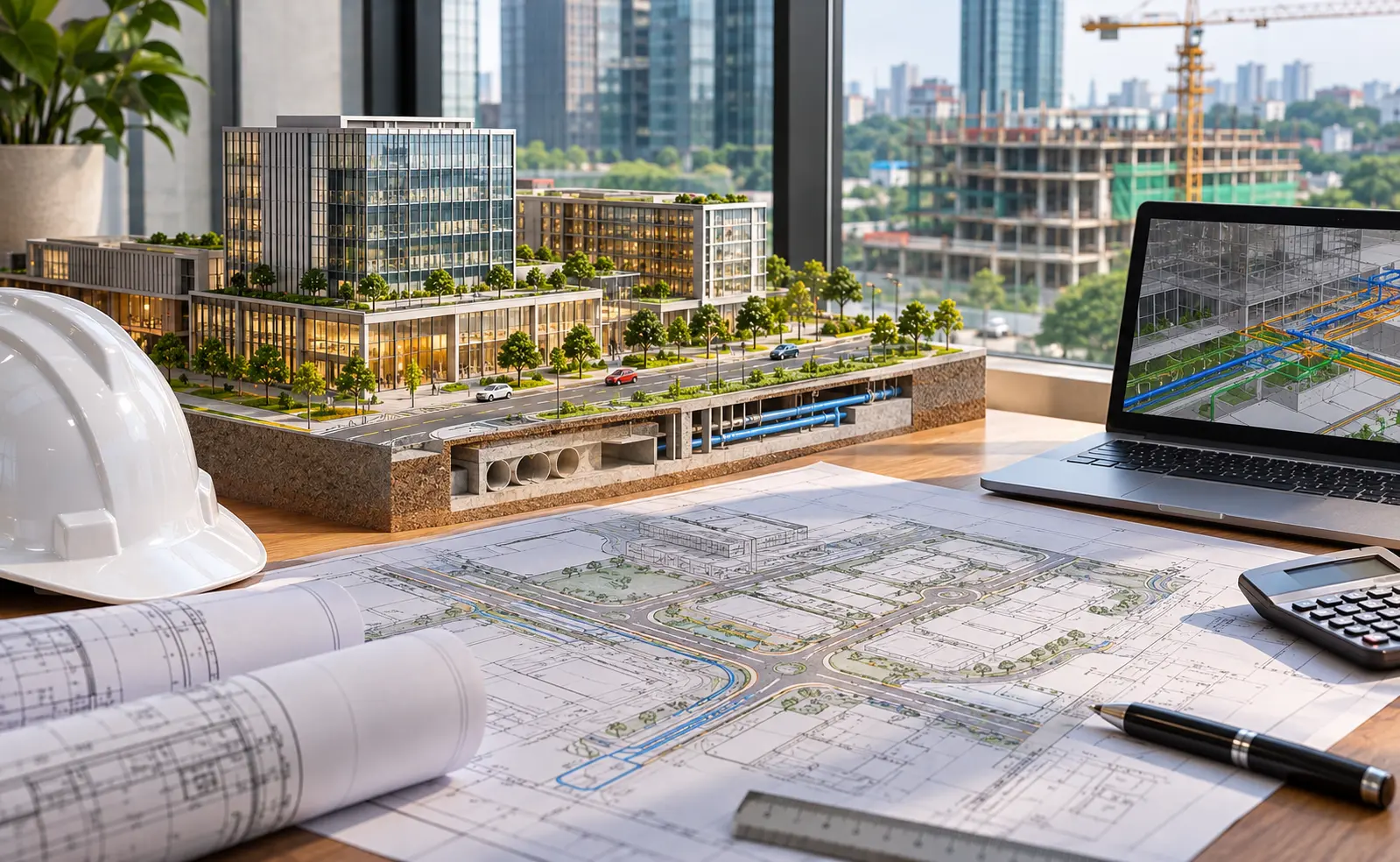
Civil engineering therefore plays an important role in successful architectural development.
Integrating Infrastructure With Building Design
For example, a large commercial complex may require coordinated vehicle entrances, stormwater drainage, pedestrian pathways, and utility distribution.
Poor infrastructure planning can create operational difficulties even when individual buildings are well designed.
Experienced global architectural engineers and civil engineering specialists can collaborate to evaluate infrastructure requirements alongside architectural planning.
This approach supports better coordination between buildings and their surrounding environment.
For projects in rapidly developing urban areas, early infrastructure evaluation can help identify technical constraints before major design commitments are made.
5. When International Design Standards Are Required
Some commercial and institutional projects must satisfy specific international performance, operational, or certification requirements.
These may arise from investor expectations, international tenants, financing conditions, or the intended use of a facility.
An international architectural engineering consultant firm may offer relevant experience in applying recognized design standards and coordinating specialist assessments.
Balancing International and Local Requirements
International design experience can support projects involving sustainability certification, specialized building systems, accessibility, or complex performance requirements.
However, international standards do not automatically replace local regulations.
Projects in Bangladesh must satisfy applicable national building requirements and approval procedures.
The most effective consultancy arrangement combines relevant international expertise with local regulatory understanding.
This balance helps ensure that proposed designs are technically appropriate, compliant, and practical for implementation.
6. When Advanced Architectural and Engineering Coordination Is Needed
Modern buildings integrate multiple technical systems within limited physical space.
Structural frameworks, electrical installations, ventilation systems, plumbing, fire protection, and architectural components must operate together.
Complex projects can benefit from coordinated digital design processes, including Building Information Modeling (BIM).
Reducing Design Conflicts
BIM-based coordination can help different consultants identify potential conflicts between building elements before construction.
For instance, a mechanical duct may interfere with a structural beam, or a plumbing route may conflict with an architectural feature.
Identifying these issues during design development can reduce avoidable construction modifications.
Experienced global architectural engineers may use coordinated modeling, technical reviews, and interdisciplinary workshops to improve collaboration.
Nevertheless, the effectiveness of these processes depends on clear responsibilities, accurate information, and consistent communication between project participants.
7. When Developing Specialized Commercial Facilities
Certain building types require specialized knowledge beyond conventional residential or office design.
Hospitals, research facilities, large hotels, airports, data centers, and industrial buildings may involve complex operational layouts and technical performance requirements.
An international architectural engineering consultant firm with relevant sector experience can help address these challenges.
Designing Around Operational Requirements
For example, hospital planning must consider patient circulation, clinical functions, infection control, and specialized building services.
Industrial facilities may require particular loading capacities, ventilation systems, equipment arrangements, and safety provisions.
Hospitality developments must coordinate guest experiences with service operations and technical infrastructure.
Specialist consultants help translate these operational requirements into architectural and engineering solutions.
The key consideration is not simply whether a firm operates internationally, but whether it has demonstrated experience with the relevant project type.
8. When Project Feasibility and Long-Term Value Matter
Early design decisions can influence construction budgets, maintenance requirements, operational efficiency, and future adaptability.
Developers planning substantial investments may benefit from multidisciplinary feasibility assessments before committing to a final design.
Evaluating Development Alternatives
Consultants can compare architectural arrangements, structural systems, infrastructure requirements, and development phases.
These assessments help clients understand potential technical challenges and the implications of different design choices.
For example, an alternative building layout may provide better circulation but require changes to the structural system.
Similarly, a more efficient service arrangement may influence the distribution of usable floor space.
Professional consultancy supports informed decision-making, although project outcomes ultimately depend on many factors, including execution quality, market conditions, and management.
9. How to Choose the Right International Architectural Engineering Consultant Firm
Choosing a consulting partner requires evaluating technical capability rather than focusing exclusively on international reputation.
Developers should examine the firm's relevant experience, professional qualifications, project methodology, and ability to coordinate with local stakeholders.
Important evaluation criteria include:
- Experience with comparable projects
- Architectural and engineering capabilities
- Relevant structural and civil engineering expertise
- Master planning and multidisciplinary coordination
- Understanding of local regulatory requirements
- Quality of technical documentation
- Project communication and reporting procedures
- Clarity regarding fees, deliverables, and responsibilities
For projects in Bangladesh, developers should also determine whether the international consultant requires a local architectural or engineering partner.
Clearly defined responsibilities help prevent coordination problems during design development and implementation.
The Value of Local Architectural Expertise in International Projects
International expertise can contribute specialized knowledge, but local architectural understanding remains essential.
Bangladesh presents distinctive considerations involving climate, construction practices, urban density, regulatory procedures, and cultural expectations.
Local architects can help international consulting teams adapt design concepts to these conditions.
This collaboration is especially valuable when international master planning consultants contribute broader technical experience while local professionals coordinate site-specific requirements.
The objective should be a unified design approach rather than separate international and local solutions.
Dcon Design Studio: Supporting Context-Responsive Architectural Development
At Dcon Design Studio, architectural development emphasizes understanding project requirements, site characteristics, functional planning, and practical implementation.
For commercial, residential, and complex building developments, these considerations provide an important foundation for coordinated architectural solutions.
The studio's approach focuses on translating design concepts into organized spaces through architectural planning, design development, and technical coordination.
Where a project requires specialized international engineering expertise, a clearly structured relationship between relevant consultants and local design professionals can help align broader technical objectives with Bangladesh's development context.
Property owners and developers can explore Dcon Design Studio's architectural services to discuss project requirements and appropriate design approaches.
Frequently Asked Questions (FAQs)
1. What does an international architectural engineering consultant firm do?
An international architectural engineering consultant firm provides architectural design, structural engineering, civil engineering, master planning, and multidisciplinary technical consultancy. Its exact services depend on professional capabilities and the agreed project scope.
2. When should developers hire international architectural consultants?
Developers may consider international consultants for large mixed-use developments, specialized facilities, complex structures, infrastructure-intensive projects, or developments requiring expertise not readily available within their existing team.
3. What is the difference between architects and master planning consultants?
Architects generally focus on building design and spatial functionality, while master planning consultants coordinate wider development requirements, including land use, infrastructure, circulation, and long-term development organization.
4. Can global architectural engineers work with local architects in Bangladesh?
Yes. International engineering professionals can collaborate with qualified local architects and engineers. Such arrangements should establish clear responsibilities for technical design, regulatory compliance, documentation, and professional approvals.
5. Why is structural integrity important in commercial developments?
Structural integrity ensures that buildings are designed to resist expected loads and environmental forces safely. Proper engineering assessment is essential for protecting occupants and supporting long-term building performance.
6. Is an international architectural engineering consultant necessary for every project?
No. Many residential and commercial developments can be successfully designed by qualified local architectural and engineering professionals. International expertise is most valuable when a project requires specialized experience or additional technical capabilities.
Conclusion
Hiring an international architectural engineering consultant firm can be a strategic decision for projects involving substantial technical complexity, specialized building functions, or large-scale development planning.
From mixed-use developments and urban master planning to structural integrity and civil engineering, multidisciplinary expertise helps developers address interconnected design challenges.
However, the most suitable consulting arrangement depends on the actual requirements of the project.
For developments in Bangladesh, combining specialized expertise with strong local architectural understanding can support practical, coordinated, and context-sensitive design solutions. You can find more guides on architecture and planning in the DCON blog.
Planning a commercial, residential, or complex architectural project?
Connect with Dcon Design Studio to discuss your architectural requirements and explore an appropriate design development approach.
Comments