
There are many architects, design studios and construction-related companies offering architectural services.
Their websites may all show attractive buildings. Their presentations may all promise modern design. Their social media pages may display impressive 3D images.
But the architect you choose will influence decisions that may remain part of your property for decades.
So how do you identify the right firm?
The answer is not to search for the company with the most complicated façade or the largest number of renderings.
A good architecture firm should demonstrate the ability to understand a project, solve practical problems, communicate clearly and transform ideas into a design that can realistically be implemented.
This guide explains what to evaluate before making that decision.
1. Start With Your Own Project Requirements
Before comparing architecture firms, understand what you actually need.
Ask yourself:
- What am I planning to build?
- Where is the land located?
- What is the approximate plot size?
- What spaces do I need?
- Who will use the property?
- What is my approximate budget?
- When would I like construction to begin?
- Do I need only architectural design?
- Do I also need interior design?
- Will I require supervision or construction support?
The clearer your requirements are, the easier it becomes to evaluate whether a firm is appropriate.
A good architecture firm in Bangladesh should also help clarify requirements that you have not yet considered.
2. Review Relevant Projects, Not Just Beautiful Projects
A portfolio is one of the first places to look.
However, avoid evaluating it only by visual appeal.
Instead ask: Has this firm worked on something similar to my project?
If you are building an apartment development, look for residential experience. If you are developing a commercial building, study commercial projects. If the project has unusual site conditions, look for evidence that the architects have handled different plot types.
Dcon Design Studio's published architectural portfolio demonstrates work across residential, commercial, healthcare and other project categories in different locations.
That type of diversity can help clients assess how an architecture practice responds to different project requirements.
3. Look for Planning Ability
Architecture begins with planning.
A beautiful elevation cannot fix an uncomfortable floor plan.
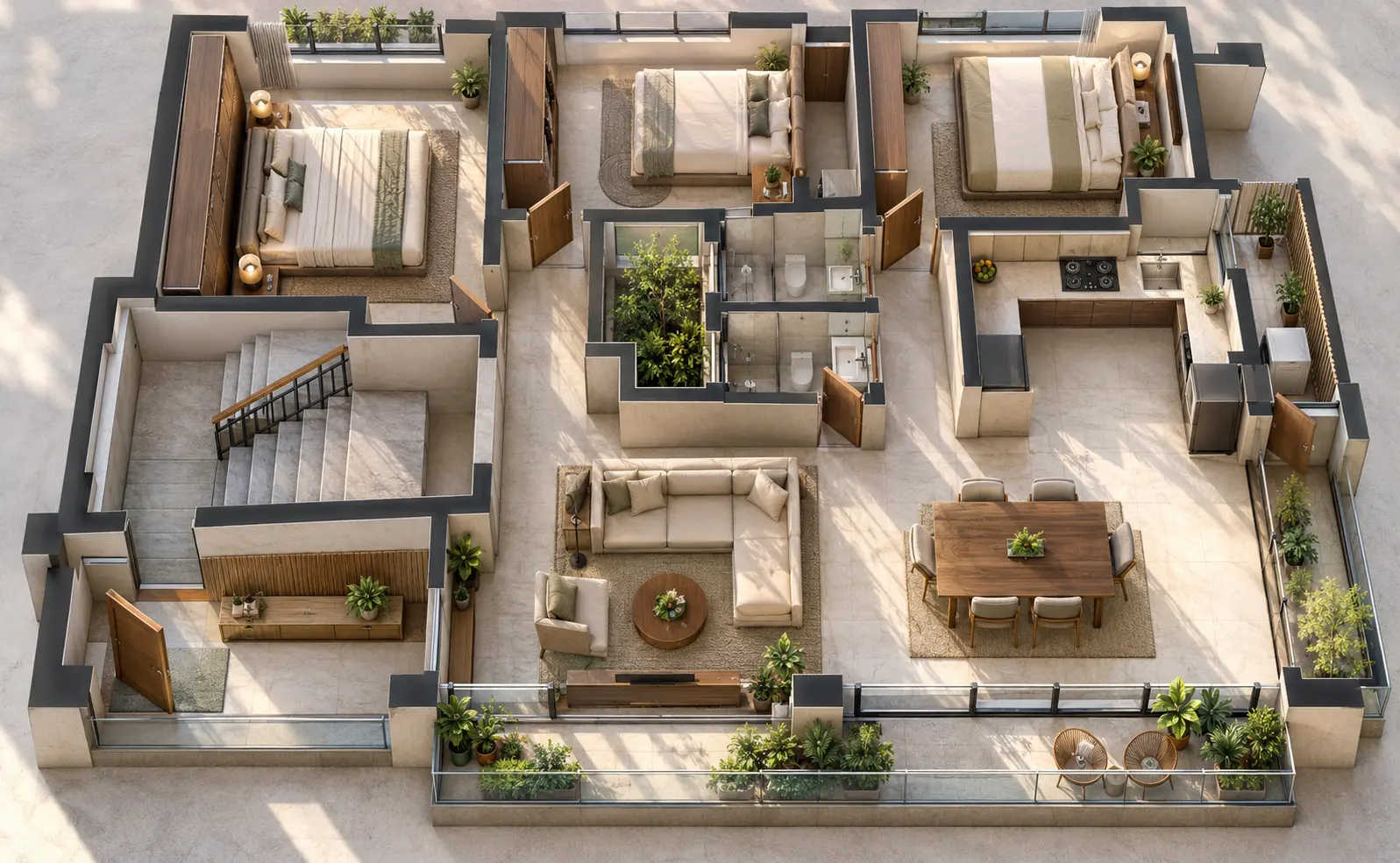
Common consequences of weak planning include:
- Awkward circulation
- Dark rooms
- Poor ventilation
- Insufficient storage
- Difficult parking
- Unnecessary corridors
- Poor privacy
- Inefficient room proportions
- Complicated service access
Ask the architect to explain the reasoning behind layouts.
Why is the staircase positioned there? Why does the living room face that direction? How does the plan use natural light? How is privacy maintained?
A strong architect should be able to explain these decisions logically.
4. Check Whether the Architect Studies the Site
A good architecture firm in Bangladesh should not start with a ready-made plan.
The site influences the building.
Important factors include:
- Land dimensions
- Road width
- Plot orientation
- Sunlight
- Prevailing wind
- Adjacent buildings
- Views
- Noise
- Access
- Surrounding development
These conditions create opportunities and limitations.
Two clients with identical functional requirements may require completely different buildings because their land conditions are different.
5. Ask How the Firm Understands Client Requirements
Architects are designers, but they are also listeners.
Your architect needs to understand how the building will actually be used.
For a residence, this may involve:
- Family size
- Lifestyle
- Privacy
- Guests
- Children
- Elderly family members
- Cooking habits
- Working from home
- Future needs
For a commercial project, the questions may involve:
- Employees
- Customers
- Operational workflow
- Departments
- Branding
- Storage
- Public access
- Security
Dcon's published architectural guidance describes early consultation as a stage for discussing project type, site information, spaces, users, lifestyle or operational needs, budget and design preferences.
That is the level of discussion clients should expect from a professional process.
6. Understand the Design Process Before Hiring
Ask the firm: What happens after I appoint you?
A professional process may include stages such as:
- Client consultation
- Requirement collection
- Site analysis
- Space planning
- Concept design
- Design review
- Design development
- Technical documentation
- Consultant coordination
- Construction-stage involvement where included
The exact process may vary by firm and project. What matters is that the process is clear.
Dcon, for example, describes its workflow around concept development, schematic design, detailed architectural planning, project coordination and site-related support depending on scope.
Knowing the process prevents confusion later.
7. Don't Judge an Architect Only From 3D Renderings
Modern visualization software can create beautiful images.
But an architectural rendering is not the same as a technically developed building.
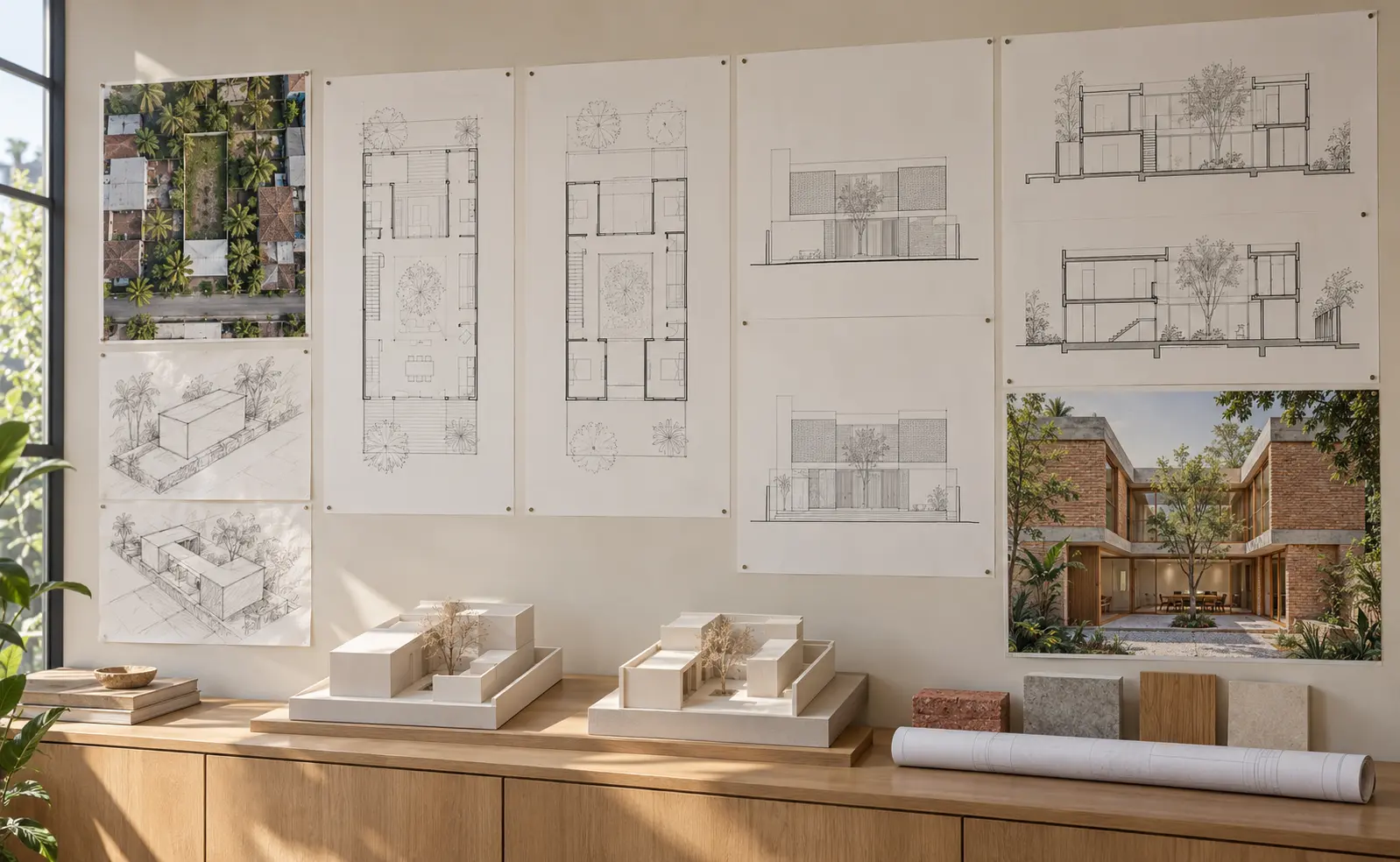
A good architecture firm should be able to move from visual concept to construction-ready architectural information.
Ask to understand how the team handles:
- Floor plans
- Sections
- Elevations
- Working drawings
- Details
- Material decisions
- Structural coordination
- Service coordination
The final quality of architecture depends on how well creative ideas survive this technical development.
8. Ask Who Will Actually Work on Your Project
The person attending the first meeting may not be the only person involved.
Ask about the project team. Who will:
- Lead the design?
- Develop plans?
- Produce drawings?
- Create visualizations?
- Communicate with you?
- Coordinate technical information?
- Visit the site where applicable?
Established firms may have specialized team members handling different stages.
Dcon's website identifies architectural staff alongside dedicated 3D visualization and drafting professionals, reflecting this type of team-based workflow.
9. Communication Is a Major Selection Factor
Many project problems are not purely design problems. They are communication problems.
A client thinks something is included. The architect thinks it is excluded. A revision is discussed but not documented. A contractor interprets a drawing differently.
Clear communication reduces these risks.
Before hiring, consider:
- How quickly does the firm respond?
- Are explanations clear?
- Do they understand your questions?
- Are revisions documented?
- Is there a defined contact person?
- Are project stages explained?
You will likely communicate with your architectural team for months. A healthy working relationship matters.
10. Ask Exactly What Is Included in the Fee
Do not compare architecture fees without comparing scope.
One proposal may include only concept and architectural drawings.
Another may include:
- Site analysis
- Conceptual design
- Architectural drawings
- 3D visualization
- Working drawings
- Coordination
- Interior consultancy
- Site visits
- Supervision
The lower quotation is not necessarily cheaper if important services must later be purchased separately.
Ask for a written scope. Understand what is included, excluded and considered additional work.
11. Evaluate Experience – But Don't Use Years Alone
Experience matters because architects learn through projects.
However, years in business should be considered together with actual work.
Dcon Design Studio states that it began in 2004, giving the practice more than two decades of industry history. It also describes growth from a small studio into a team of approximately 85 people across four offices.
Those numbers provide useful context. But clients should still examine relevant projects and design quality before making a decision.
A long history and a suitable portfolio together provide a stronger picture.
12. Consider Local Knowledge
Bangladesh has architectural conditions that cannot be ignored.
These include:
- Hot summers
- High humidity
- Heavy monsoon rainfall
- Dense urban areas
- Increasing land values
- Different plot configurations
- Privacy expectations
- Local construction practices
Architects working here need to understand these realities.
Climate-responsive decisions can involve:
- Orientation
- Cross ventilation
- Shading
- Window placement
- Rain protection
- Daylight
- Landscape
- Material selection
Dcon's architectural content also discusses these local climate factors as important considerations when designing for Bangladesh.
13. Ask How the Firm Approaches Sustainability
Sustainable architecture should not be limited to adding plants to a building.
Fundamental planning decisions often matter more.
For example:
A well-positioned window can improve daylight. Cross ventilation can improve natural airflow. Shading can reduce direct solar heat. Appropriate orientation can improve environmental performance.
Good architecture integrates these ideas from the beginning rather than applying them as decoration later.
14. Check Whether Design Decisions Match Your Budget
Every client has financial limitations. A responsible architect needs to understand them.
Budget-conscious design does not necessarily mean inexpensive architecture. It means setting priorities.
A project may invest more in spaces and elements that create meaningful value while simplifying less important components.
Ignoring cost during design can lead to painful compromises later. Discuss budget expectations early.
15. Look for Original Thinking, Not Repeated Templates
Study several projects by the architecture firm.
Do all the buildings look almost identical? Do the same façade features appear repeatedly? Or does each project appear to respond differently to its site and purpose?
A good architecture firm should have a recognizable level of quality without forcing every client into the same visual language.
Architecture should reflect the project. Not the template.
16. Ask About Engineering Coordination
Architecture cannot operate independently.
Buildings also contain:
- Structures
- Electrical systems
- Plumbing
- Mechanical systems
- Fire safety requirements
- Vertical transportation
- Other specialized systems
Coordination helps prevent conflicts between disciplines.
Ask who is responsible for this coordination and what is included within the architectural service.
Dcon's published explanation of professional architectural services also identifies technical and project coordination as part of the broader architectural process.
17. Be Careful With Unrealistic Promises
Be cautious when a company promises everything instantly.
Architecture requires analysis. A professional architect may challenge some of your ideas.
That is not necessarily negative. If something is impractical, uncomfortable or likely to create problems, the architect should explain why.
You are hiring expertise, not simply someone to agree with every request.
Questions to Ask Before Hiring an Architecture Firm
Take these questions to your first meeting:
- Have you completed projects similar to mine?
- Who will lead my project?
- What services are included?
- How does your design process work?
- How many revisions are included?
- What drawings will I receive?
- Is 3D visualization included?
- How do you coordinate with structural and MEP consultants?
- Are site visits or supervision included?
- What information do you need from me?
- What is the expected design timeline?
- What happens if the scope changes?
- How are fees structured?
- Can I review relevant portfolio projects?
The answers can reveal far more than a promotional brochure.
Red Flags to Watch For
You may want to investigate further if:
- The firm cannot explain its design process
- Every project looks almost identical
- Scope is unclear
- The quotation contains little detail
- Technical documentation is not discussed
- Communication is consistently difficult
- The architect ignores site conditions
- Design begins without understanding requirements
- Unrealistic timelines are promised
One red flag does not necessarily mean the firm is unsuitable. But several should encourage caution.
Why Consider Dcon Design Studio?
Dcon Design Studio offers several factors clients can evaluate objectively.
The practice dates back to 2004 and describes an approximately 85-person organization with four offices.
Its published architecture portfolio demonstrates experience across multiple project types and geographic locations.
Dcon also describes an architectural process built around understanding project requirements, site conditions, planning, design development and coordination.
These are useful criteria for anyone comparing architectural firms.
Ultimately, however, the right choice should depend on how well the firm's experience and approach fit your particular project.
Finding a Good Architecture Firm in Bangladesh
Choosing an architect should not feel like choosing a product from a catalogue. Architecture is a professional relationship.
Your architect will help shape how your land is used, how spaces connect and how the building may look and function for many years.
Take time to review portfolios. Meet the team. Ask questions. Understand the scope. Discuss your budget. Learn how the process works.
Then choose the architectural firm that gives you the strongest confidence in both its ideas and its ability to turn those ideas into reality.
If you are currently searching for a good architecture firm in Bangladesh, Dcon Design Studio's project portfolio and architectural team can be explored as part of your comparison.
The right architect is not simply the one who can draw what you ask for. It is the one who can help you understand what your project can become.
Frequently Asked Questions
1. How do I find a good architecture firm in Bangladesh?
Start by reviewing relevant projects, experience, process, team capability, communication quality and service scope. Meet shortlisted firms before making the final selection.
2. What should I ask an architect before hiring?
Ask about similar projects, fees, services, timeline, revisions, drawings, project team, consultant coordination and construction-stage involvement.
3. Should I choose the cheapest architecture firm?
Price should be considered, but quotations should only be compared after understanding the services included. A lower price may represent a significantly smaller scope.
4. How important is an architect's portfolio?
Very important. The portfolio helps you understand the firm's experience, design approach and suitability for your project type.
5. Should an architect visit the project site?
Site understanding is an important part of architectural planning because orientation, access, surrounding conditions and plot characteristics can influence the design.
6. How long has Dcon Design Studio worked in architecture?
Dcon Design Studio states that its journey began in 2004.
7. Does Dcon Design Studio work outside Dhaka?
Its published portfolio includes projects in Dhaka, Chattogram, Purbachol, Cumilla and other areas.
8. Does a good architecture firm also provide construction?
Not necessarily. Architecture and construction are separate scopes. Dcon Design Studio focuses on design, while its website also identifies D-Construction Technologies as a separate venture specializing in construction management.
Comments